
The Contractor’s Guide to Driveway Restoration | Driveway Sealing Austin
Your driveway is high-traffic real estate—the literal bridge between the street and your home. In Central Texas, it’s also a battlefield. Triple-digit heat and relentless UV exposure do more than just fade concrete; they compromise the substrate. Professional maintenance isn’t just about aesthetics; it’s about asset preservation.
Phase 1: Substrate Preparation & Deep Extraction
A sealer is only as good as the bond it creates with the surface. Before we even look at a sprayer, the substrate must be surgically clean. Professional pressure washing isn't "blasting dirt"—it’s a calculated balance of GPM (Gallons Per Minute), heat, and chemical surfactants. We use industrial degreasers to break the molecular bond of road grime, organic growth, and oil spills that have migrated deep into the concrete pores.
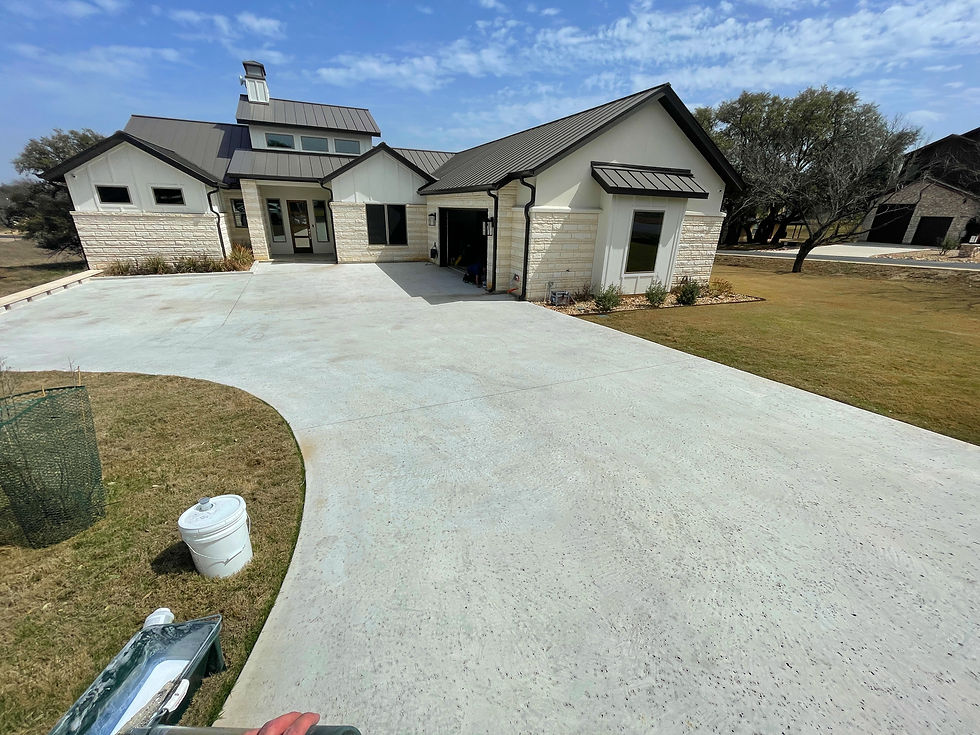
Note the heavy black marring. In the Texas heat, we deal with "plasticizer migration." When hot tires sit on unsealed concrete, the rubber literally bleeds into the pores. Removing this requires professional-grade surface cleaners to ensure a uniform profile without the "zebra striping" typical of DIY wand work.
Phase 2: Specifying the Protective Barrier
Selecting a sealer is a technical decision based on the material's porosity and the client's performance requirements.
The Industry Standard: Urethane/Acrylic Hybrids For residential flatwork, this is our "gold standard" spec. You get the breathability and ease of an acrylic combined with the high-performance chemical resistance of a urethane. This hybrid creates a robust shield against UV degradation and hot-tire pick-up, cured to a non-yellowing, long-lasting semi-gloss finish.
Pebble & Exposed Aggregate These require a high-solids, film-forming sealer. We spec a specialized "stone-lock" formula that acts as a structural binder, preventing stone raveling while deepening the natural color of the aggregate.
Penetrating Silane-Siloxanes For clients requesting a "natural" look with zero gloss, we use penetrating sealers. These work chemically beneath the surface to create a hydrophobic barrier. They are excellent for water-shedding but offer slightly less protection against oil and chemical staining compared to film-forming hybrids.
The Bottom Line | Driveway Sealing Austin
As contractors, our goal is to extend the service life of your concrete. By sealing the pores, we block moisture intrusion and chemical saturation. This investment ensures that when the next heatwave hits, your driveway isn't just surviving the elements—it’s repelling them. Driveway Sealing Austin


Comments